Logo

Recovery After Gallbladder Surgery: A Week-by-Week Timeline 

What happens in the weeks after gallbladder surgery? Understand how pain, diet, activity and healing may change as you progress through recovery.
Recovery After Gallbladder Surgery Singapore
Recovery after gallbladder surgery is a gradual process involving wound healing, improving mobility, dietary adjustment and a progressive return to normal activities.

Gallbladder removal can relieve the pain and complications caused by gallstones, but it is normal to wonder what recovery actually involves.

Many people can return to light daily activities within a few days after laparoscopic gallbladder surgery, which uses small incisions and minimally invasive techniques. Recovery after open gallbladder surgery generally takes longer and may take around 4–6 weeks. Understanding the recovery process week by week can help you manage expectations, reduce anxiety, and recover safely and comfortably.

What can affect your recovery timeline?

Recovery after gallbladder surgery is different for everyone. Some patients feel comfortable returning to their usual routine relatively quickly, while others may need more time to regain their energy and mobility.

Factors that can affect your recovery include:

  • Type of surgery — Recovery is generally quicker after laparoscopic surgery than open surgery because the incisions are smaller.
  • Reason for surgery — Recovery after planned surgery may differ from recovery after an emergency operation for an acute gallbladder problem.
  • Severity of the condition — Significant inflammation, infection or other gallbladder-related complications may make recovery more complex.
  • Conversion to open surgery — Occasionally, laparoscopic surgery needs to be converted to open surgery for safety, resulting in a longer recovery period.
  • General health — Your age, fitness, existing health conditions and overall ability to heal can affect your progress.
  • Type of work and activity — Returning to a desk-based role may be possible sooner than returning to work involving heavy lifting or prolonged physical activity.
  • Postoperative complications — Problems that develop during or after surgery may require additional treatment and extend recovery.

A week-by-week timeline can provide a useful guide, but your surgeon’s advice and your own progress are more important than reaching a particular milestone by a specific day.
Gallbladder surgery recovery at a glance

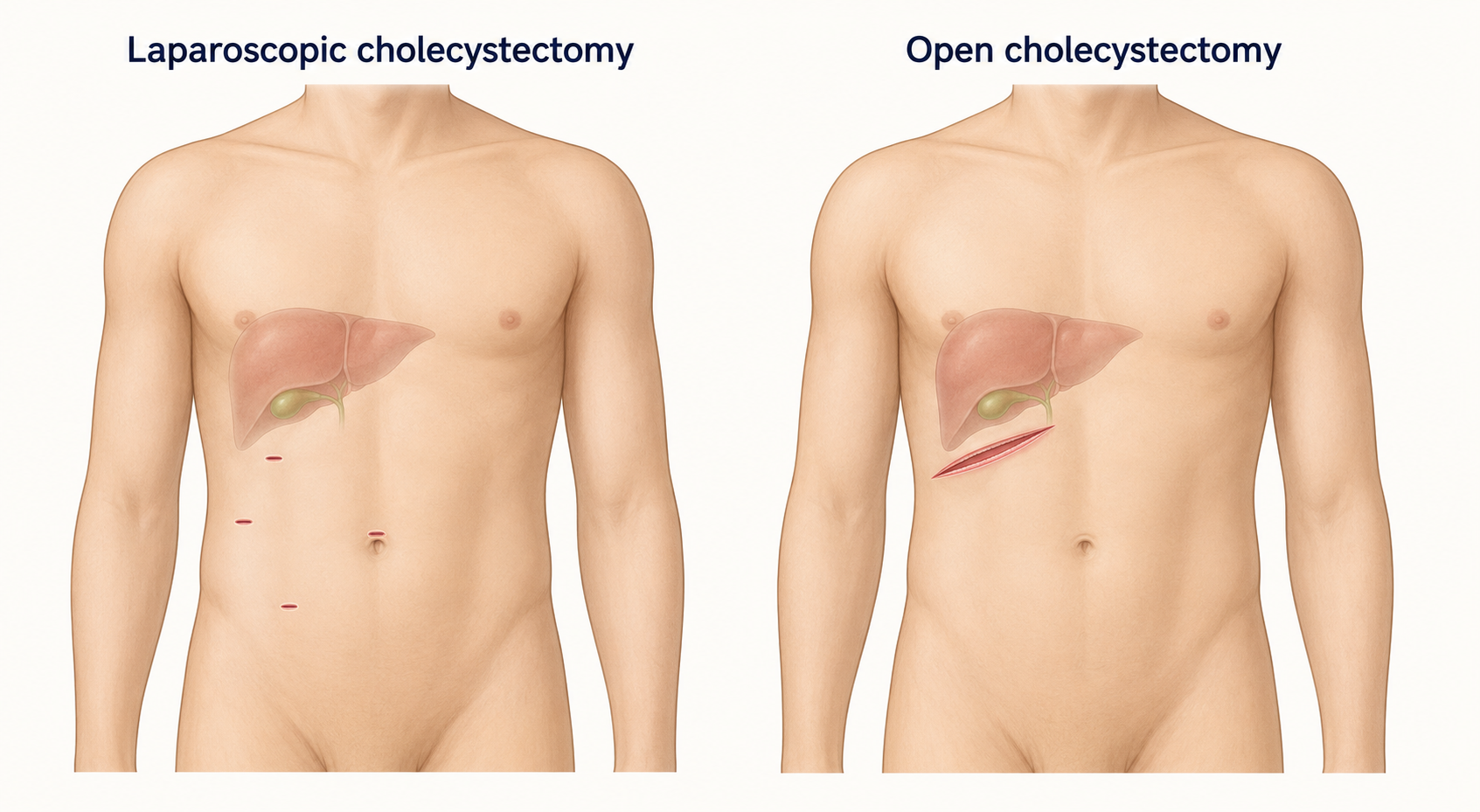
Diagram showing the incision sites for laparoscopic and open gallbladder removal surgery.
Recovery is generally faster after laparoscopic gallbladder surgery, while open cholecystectomy typically requires a longer healing period due to the larger abdominal incision.
Time after surgeryWhat you may expectActivity & Recovery
First 24 hoursIncision discomfort, tiredness, bloating, nausea or shoulder-tip painRest, drink fluids and begin gentle movement as advised
Days 2–7Pain and bloating gradually improve, although energy and appetite may still be reducedTake short walks, care for your wounds and gradually resume light daily activities. Some people may return to desk-based work if comfortable.
Week 2Incisions continue healing and movement usually becomes more comfortableGradually increase everyday activities.
Weeks 3–4Energy and stamina continue to improveProgressively increase activity, while avoiding heavy lifting or strenuous abdominal exercise until cleared
Weeks 4–6+Many people are approaching their usual routine after uncomplicated laparoscopic surgeryGradually return to exercise and fuller activity according to your recovery and surgeon’s advice

The following timeline provides a general overview of recovery after an uncomplicated laparoscopic gallbladder removal. Recovery after open surgery generally takes longer.

Week 1: After gallbladder surgery 

What to expect after surgery

It is normal to experience some discomfort during the first few days after surgery. Common symptoms include:

  • Mild pain around the incision sites
  • Shoulder discomfort and abdominal bloating caused by the gas used during laparoscopic surgery
  • Fatigue
  • Mild nausea
  • Temporary constipation or diarrhoea

These symptoms usually improve gradually with rest, gentle walking and medication as advised by your doctor.

Wound care after gallbladder surgery

Proper wound care after gallbladder surgery is important to support healing and prevent infection. After laparoscopic gallbladder surgery, you will usually have 3–4 small incisions on your abdomen. These incisions are typically closed with absorbable stitches and adhesive strips (Steri-Strips), then covered with waterproof dressings. These dressings are usually removed during your follow-up appointment about 1 week after surgery.

Below are examples of surgical wounds and dressings after the surgery and during the recovery period.
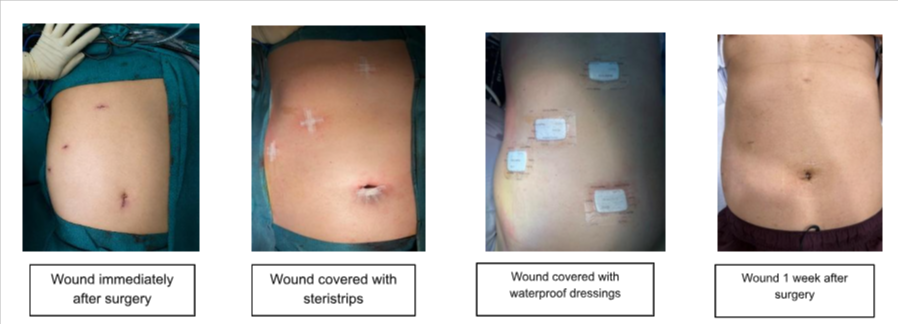
Please note: Photos are for educational purposes only. The appearance and healing time of surgical wounds may vary between individuals.

How to care for your wounds

  • Keep your wound dressings clean and dry.
  • You may shower with the dressings on. Allow water to gently run over the waterproof dressings but avoid scrubbing or rubbing the wound area. After showering, gently pat the area dry with a clean towel.
  • Avoid picking or scratching the wound, as this may delay healing or increase the risk of infection.
  • If your dressing becomes wet, loose, or stained, you may replace it with a new dressing as instructed by your healthcare provider.

Weeks 2–6: Recovery period and getting back to your daily routine

As your body heals, you can gradually increase your daily activities.

Returning to daily activities

  • Gentle walking is encouraged as it helps improve circulation and supports recovery.
  • Gradually increase your activity level in 1-2 weeks
  • Avoid heavy lifting, strenuous exercise or activities that strain your abdomen until your doctor advises that it is safe.

What is normal during healing?

The following are common during recovery and usually improve gradually:

  • Mild redness around the incision edges
  • Slight bruising 
  • Mild tenderness or itch

When to seek medical attention

Contact the doctor if you notice:

  • Increasing redness, warmth, or swelling around the wound
  • Worsening pain 
  • Discharge (pus) from the wound 
  • Fever or chills
  • The wound opening up

What to eat after gallbladder surgery

Your digestive system may take some time to adjust after gallbladder removal. During the early recovery period, smaller, lower-fat meals can help reduce digestive discomfort such as bloating or diarrhoea.

During recovery, you can:

  • Eat small, frequent meals instead of large portions.
  • Choose low-fat foods, such as lean meat, fish, tofu, vegetables, fruits, and whole grains.
  • Drink plenty of water to stay hydrated.
  • Gradually increase your fibre intake to help prevent constipation.

Foods to avoid:

During the first few weeks after surgery, try to avoid 

  • Oily and fried foods 
  • Spicy foods
  • Alcohol
  • Sugary or highly processed foods

These foods may cause bloating, indigestion, or diarrhoea while your body adjusts. Most people can gradually reintroduce these foods over time
Summary

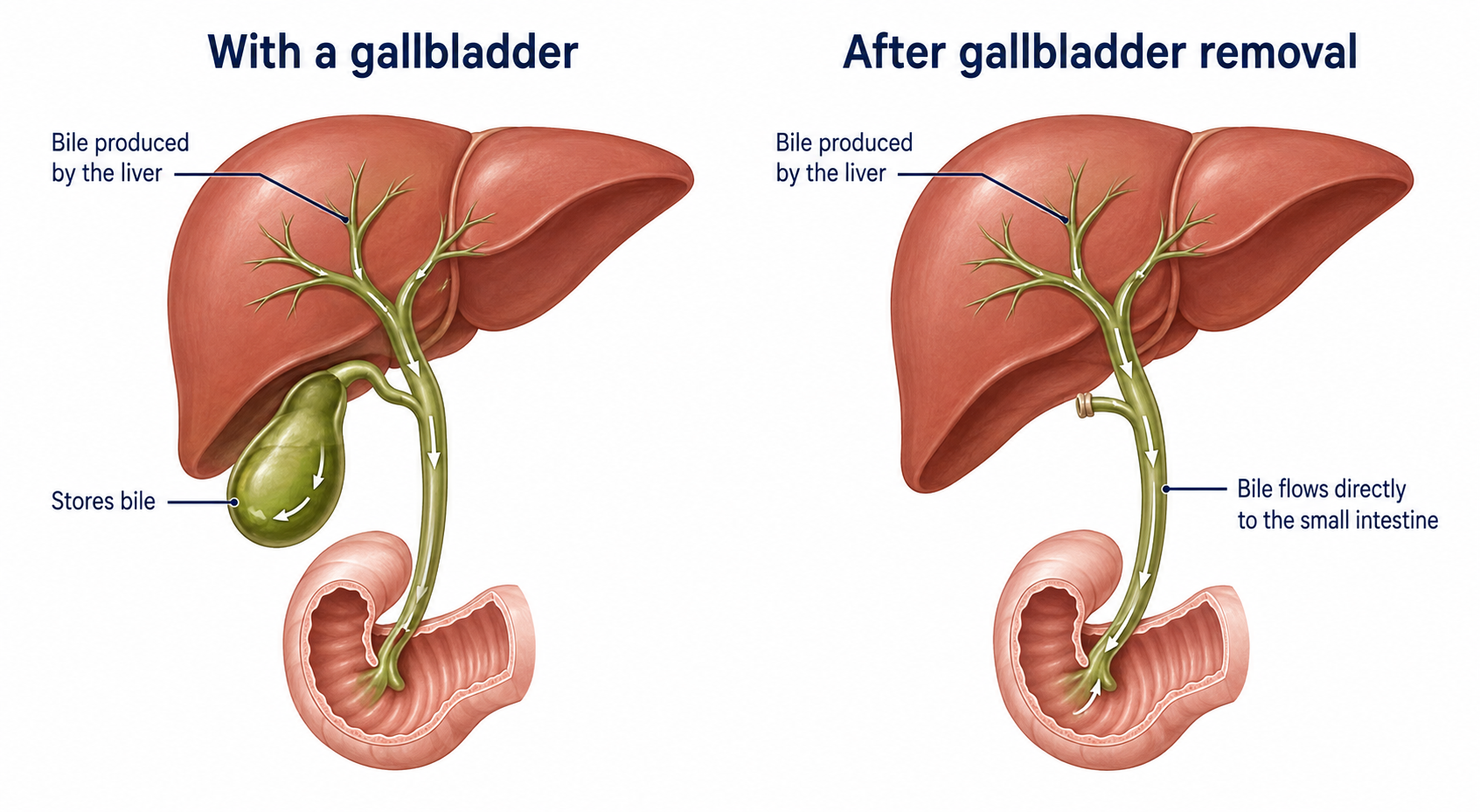
Diagram comparing bile flow with a gallbladder and after gallbladder removal.
After gallbladder removal, the liver continues producing bile, which flows directly through the bile ducts into the small intestine.

Recovery after gallbladder surgery is usually straightforward and relatively quick, particularly after laparoscopic surgery. Following your surgeon’s advice, caring for your wounds, taking regular gentle walks, and maintaining a balanced diet can help support a smooth recovery.

If you have concerns about your recovery or develop symptoms such as worsening pain, fever, or signs of wound infection, seek medical advice promptly.

Most people can live normally without a gallbladder and gradually return to their usual diet and activities after recovery. If you are preparing for gallbladder surgery or would like personalised advice about your recovery, schedule a consultation with Dr Lee Chin Li at Lee Surgery. He can assess your condition, discuss the appropriate treatment approach and guide you through what to expect before and after surgery.

Frequently asked questions

Is it normal to feel tired after gallbladder surgery?

Yes. Fatigue is common during the early stages (first few days after surgery) as your body uses energy to heal. Anaesthesia, changes in sleep and appetite, and the underlying condition that led to surgery can also contribute. Energy levels should gradually improve as you recover.

When can I sleep on my side after gallbladder surgery?

You can usually return to sleeping on your side once it feels comfortable and does not place excessive pressure on your incisions. Some people prefer to avoid the side of their surgical wounds during the early recovery period. If you experience pain or pulling around the incisions, return to a more comfortable position and allow more time for healing.

Why does my shoulder hurt after laparoscopic gallbladder surgery?

Shoulder-tip pain can occur after laparoscopic gallbladder surgery because carbon dioxide gas is used to create space in the abdomen during the procedure. Residual gas can irritate the diaphragm and cause referred pain that is felt in the shoulder. This usually improves as the gas is absorbed by the body.

Dr Lee Chin Li

MB BCh BAO, LRCP & SI (NUI), IMRCS (Ire), MMED (SURG), FRCS (Ed)

Expertise in Liver, Pancreas and Minimally Invasive Surgery.

This article has been medically reviewed by Dr Lee Chin Li

Dr Lee Chin Li is a General Surgeon with extensive experience in hepatobiliary and pancreatic (HPB) surgery, specialising in the treatment of liver, pancreas and bile duct cancers. Skilled in minimally invasive and advanced laparoscopic techniques — including single-incision laparoscopic surgery (SILS) — he also manages a wide range of general surgical conditions such as gallstone disease, hernia, appendicitis, and gastrointestinal disorders.

Formerly the founding Head of HPB Surgery at JurongHealth Campus (NUHS), Dr Lee is recognised for his empathetic approach and dedication to providing high-quality, patient-centred surgical care.
+65 8952 6327
Whatsapp or Call

Any other questions?

Talk to us! Drop us a message here :


    Gleneagles Medical Centre
    Lee Surgery and Endoscopy
    6 Napier Road, #04-16, Singapore 258499

    Mount Elizabeth Medical Centre (Orchard)
    Dr Lee @ KYM Surgery
    3 Mount Elizabeth, #12-01, Singapore 228510

    Farrer Park Medical Centre
    Dr Lee @ KYM Surgery
    1 Farrer Park Station Road, #13-05, Singapore 217562

    Logo

    Services

    Endoscopy

    Gastrointestinal

    Colorectal


    Gallbladder

    Pancreas

    Liver

    “ Our success is measured by your well-being. ”

    Copyright - © 2024. All Rights Reserved | Lee Surgery and Endoscopy